Buying a home especially your first, is one of the most exciting milestones in life. But the process becomes confusing very quickly when developers start talking in numbers that don’t match what you can actually use. You like a 1,500 sq. ft. apartment… until you step inside and wonder where the rest of those promised square feet disappeared.
That confusion isn’t your fault. Real estate uses different “area” terms for marketing, construction, and pricing and knowing the difference can save you money, disappointment, and arguments about why the bed doesn’t fit the way you imagined.
This guide will help you understand what you’re truly paying for particularly in key property hotspots of Delhi NCR, including Noida, Greater Noida, Gurugram, and Ghaziabad.
Built-Up Area: The Practical Measurement
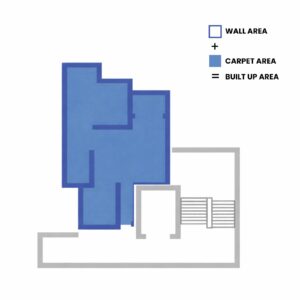
Built-up area includes the carpet area (usable indoor space) plus:
- Wall thickness (internal + external)
- Attached balconies or terraces
It gives you a clear idea of the home’s semi-usable space more aligned with day-to-day function than those big brochure numbers.
Carpet Area ≈ 80–85% of Built-Up Area
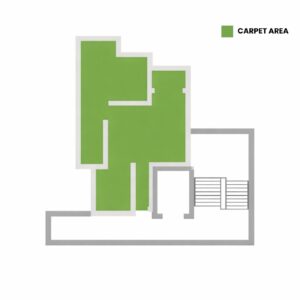
So, a flat advertised with 1,200 sq. ft. built-up area usually offers around 960–1,000 sq. ft. of functional indoor space.
Why it matters:
You can actually visualize your interiors better, where the sofa goes, how wide the bedroom feels, how much storage is possible.
Super Built-Up Area: The Marketing Measurement
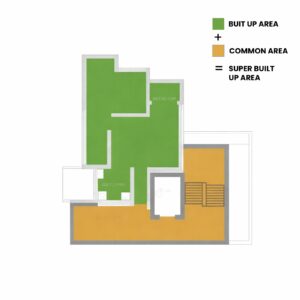
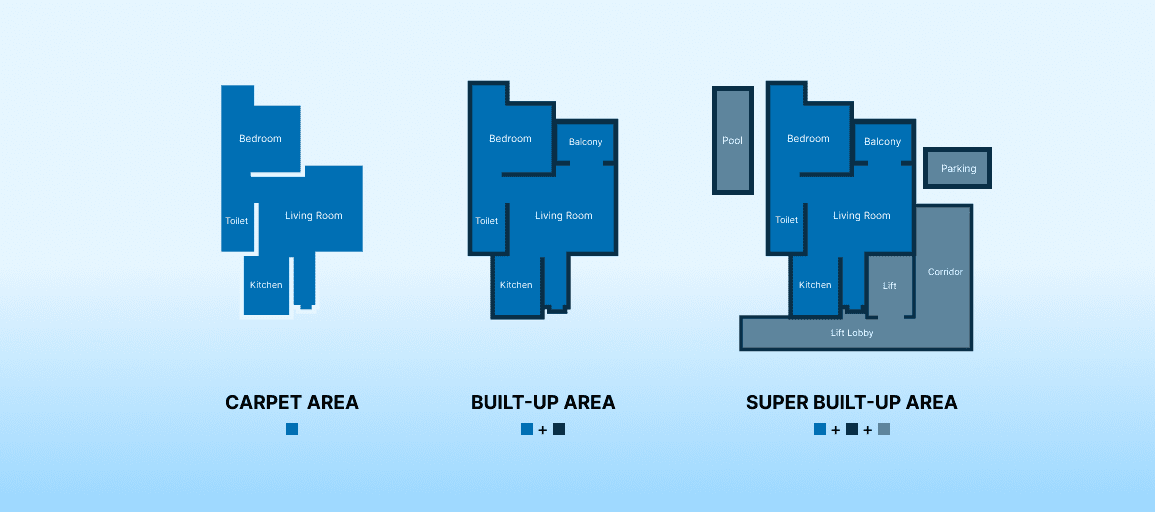
Developers mostly highlight super built-up area because it sounds larger and it includes:
- Entire built-up area
- A proportionate share of common spaces like:
- Lobby & corridors
- Lift areas
- Amenities (clubhouse, gym, pool, community spaces)
This number tells you how big the society is, not necessarily your home.
Carpet Area ≈ 65–70% of Super Built-Up Area (known as loading)
Formula to Calculate Loading Factor
The loading factor is calculated using the following formula
Loading Factor = (Super Built-up Area ÷ Carpet Area) – 1
For example, if the loading factor is 0.4, the developer has added 40% more space to the carpet area. If the carpet area is 1000 square feet, the super built-up area would be 1400 sq.ft.
Luxury projects with more amenities often go even heavier on loading, so the “big” size is more of a shared illusion.
Saleable Area: The Price Tag Measurement
This is the number developers use to calculate the cost:
Price = Rate per sq. ft. × Saleable Area
And “Saleable Area” = usually Super Built-Up Area
So, you’re paying for:
- The home you live in
- The walls you share
- The fancy gym you may use twice a month
- The lobby you pass through in 8 seconds daily
This is where most buyers unknowingly overpay because they assume bigger number equals bigger home.
The difference between what you pay for and what you get can be huge.
Buyers who depend only on super built-up area miss crucial usability details like:
- Can the master bedroom support a king bed and wardrobes?
- Is the dining space practical for daily family use?
- Do balconies add lifestyle value or reduce indoor space?
- Are you paying extra because the society has a gigantic clubhouse you don’t actually need?
Understanding area terms protects you from pricey surprises.
How This Knowledge Improves Your Decision
Here’s the value of being well-informed:
- Fair Budgeting
- Better Comparisons
- Confident Negotiation
- Avoiding Post-Possession Regret
Smaller usable space = compromised comfort for years.
Bottom Line
You don’t buy a home to measure the lobby or the gym.
You buy it to measure comfort, space, and lifestyle inside your walls.
Super built-up and saleable area may make a project look bigger but carpet area defines how you live.
Understanding these terms gives you Transparency, Negotiation power and Smarter investment outcomes
When you’re spending your hard-earned money on a home, this clarity isn’t optional. It’s essential.